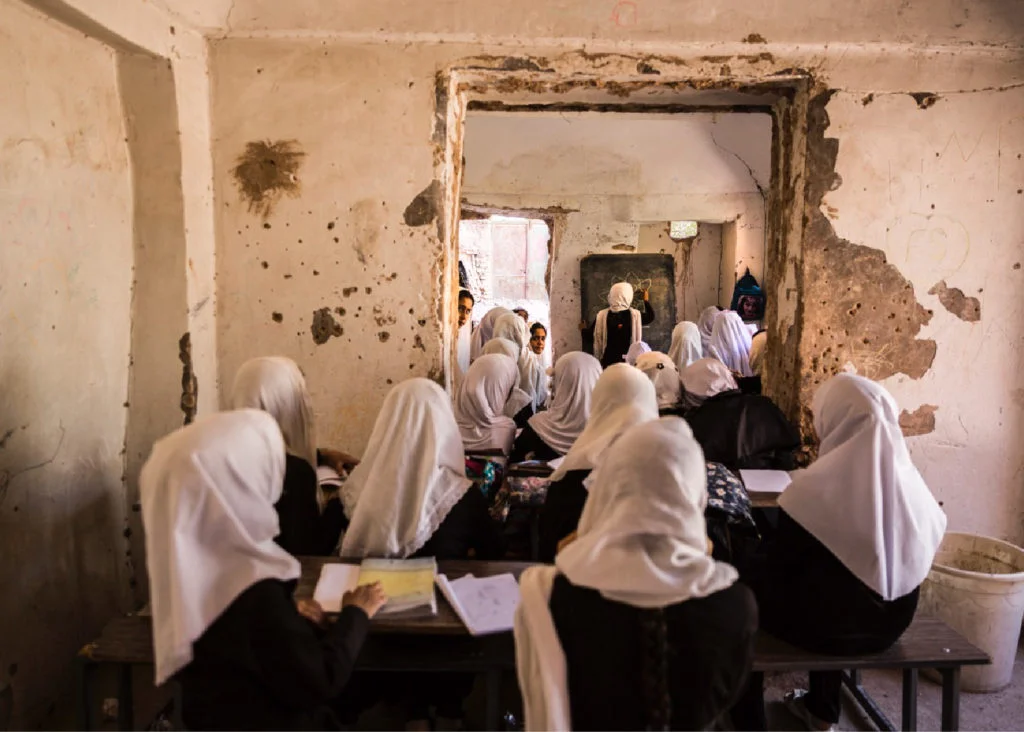
As the 2025 academic year begins and schools reopen in Afghanistan, it marks the fourth year that women and girls in the country have been deprived of their right to secondary and higher education. Over this period, the Taliban have systematically and extensively barred more than 1.5 million eligible girls from accessing education through a series of written and verbal decrees, limiting education beyond primary school and more recently banning crucial medical and midwifery education for young women. Despite the widespread demand for women’s education in Afghanistan and global and regional outcry, there is no indication of a shift in the Taliban’s discriminatory policies, or any concrete hope for the reopening of girls’ schools beyond the sixth grade. This situation constitutes a blatant violation of the provisions outlined in the International Convention on the Elimination of All Forms of Discrimination Against Women (CEDAW), ratified by Afghanistan. Additionally, the Taliban’s forceful repression of women’s access to education amounts to gender persecution.
The deprivation of women and girls from education has already inflicted severe social, psychological, and economic consequences on families and the broader society in Afghanistan. The young woman who once dreamed of pursuing higher education and achieving academic excellence now face an uncertain future, struggling with numerous challenges. Depression and mental health disorders, forced and early marriages, and an alarming rise in suicide attempts are among the most serious consequences of the ban on education for young women and girls. This discriminatory policy has also deprived society of the potential skills and talents of women, causing irreversible damage to Afghanistan’s prosperity and progress.